AI Box solution for Bao Ha Temple, a national historical and cultural relic (Lao Cai)
3 AI Boxes analyse video from the temple's 48 cameras right on site. The system spots fire, fights and restricted-area intrusion early and counts people in real time, then sends alerts with annotated snapshots to a central dashboard within seconds.
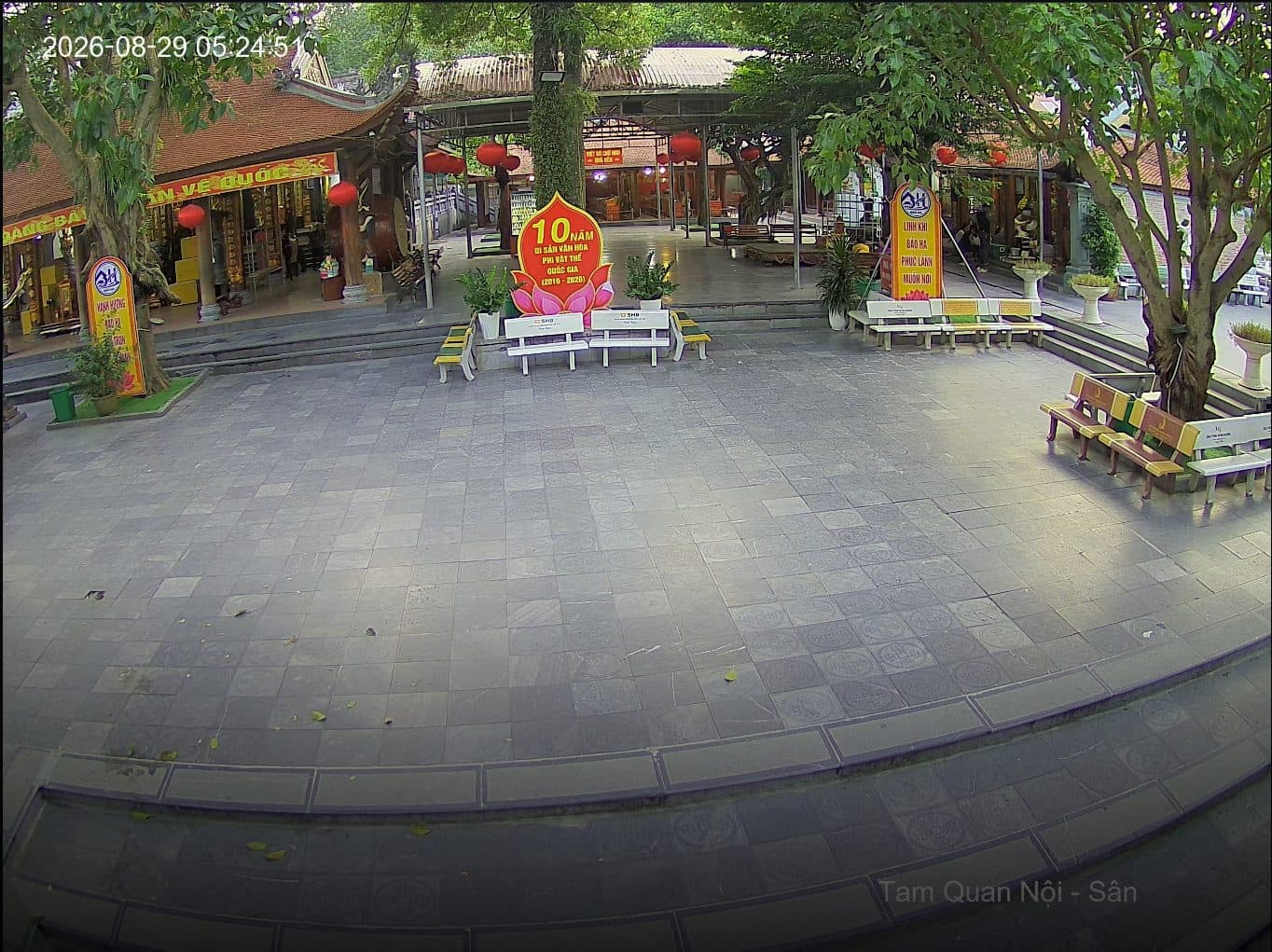
Real footage from the Tam Quan Noi courtyard camera at Bao Ha Temple.
Edge AI processing — no need to stream all video to a central site
3 AI Boxes3 AI Boxes
Edge AI processing — no need to stream all video to a central site
Existing IP cameras analysed continuously by AI
48 cameras48 cameras
Existing IP cameras analysed continuously by AI
Automated monitoring and alerts
24/724/7
Automated monitoring and alerts
Challenges
Seasonal visitor surges: around 300,000 visits in spring 2026 and more than 136,000 during the 7th-lunar-month festival (Lao Cai Newspaper).
High fire risk from incense, candles and votive paper burning among wooden structures.
Pushing and scuffles in the courtyard, gate and incense area when crowds build up.
The rear sanctuary and donation boxes need after-hours protection; one person cannot watch dozens of screens at once.
Deployed solution
3 AI Boxes read RTSP streams directly from 48 existing IP cameras — no camera replacement, no video sent to the cloud.
Four zone-based functions: fire detection, fight detection, restricted-area intrusion, people counting.
Instant alerts via webhook to a central dashboard, with an annotated snapshot.
Secure remote access over HTTPS to update configuration, zones and models.
Value delivered
Fire and security incidents spotted early, before they spread.
Real-time crowd density to manage visitor flow during festivals.
Staff only handle alerts instead of watching every screen.
The temple keeps its solemn atmosphere without adding many on-site personnel.
Visitor numbers from Lao Cai Newspaper. “Value delivered” describes what the running system does, not measured statistics.
Technology
Existing cameras, AI processing on site
Each AI Box runs AI models on a dedicated chip and analyses many camera streams at once. All analysis stays inside the temple's local network; only alert messages (event type, camera, time, bounding box) and one annotated snapshot leave it.
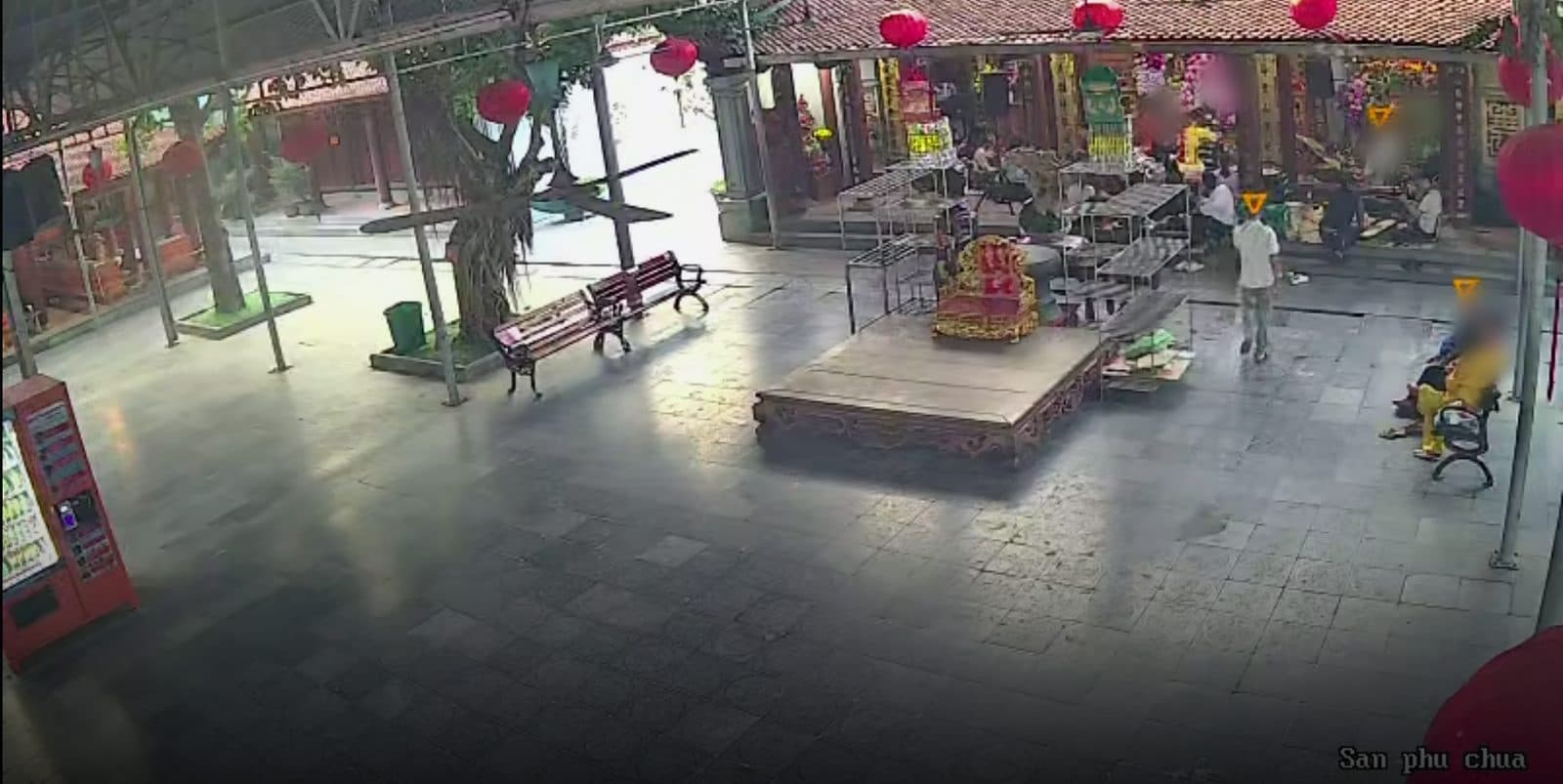
Real footage from the Phu Chua courtyard camera — yellow markers are people detected by the AI Box; faces are blurred.
From the system
Bao Ha Temple through AI cameras
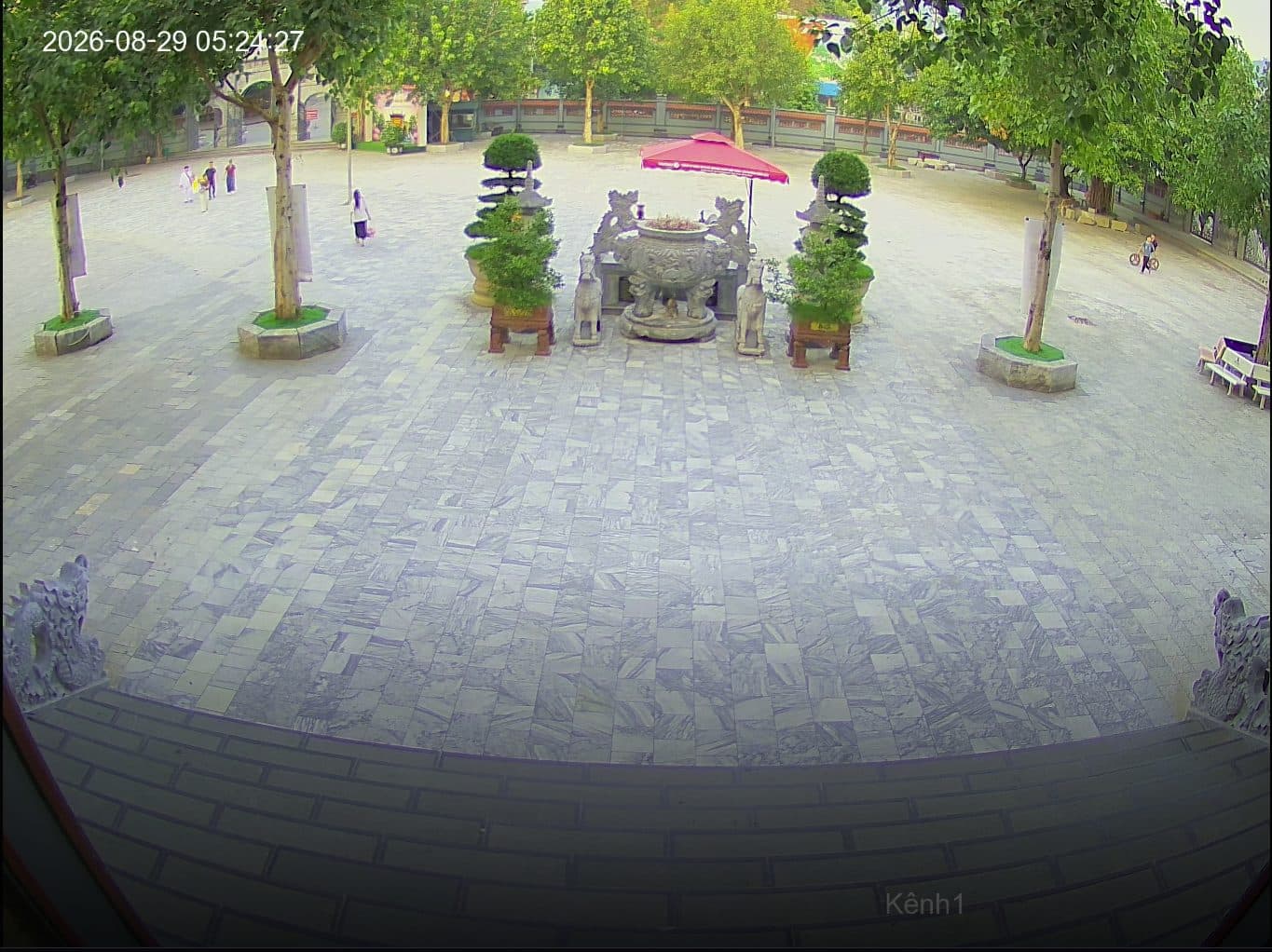
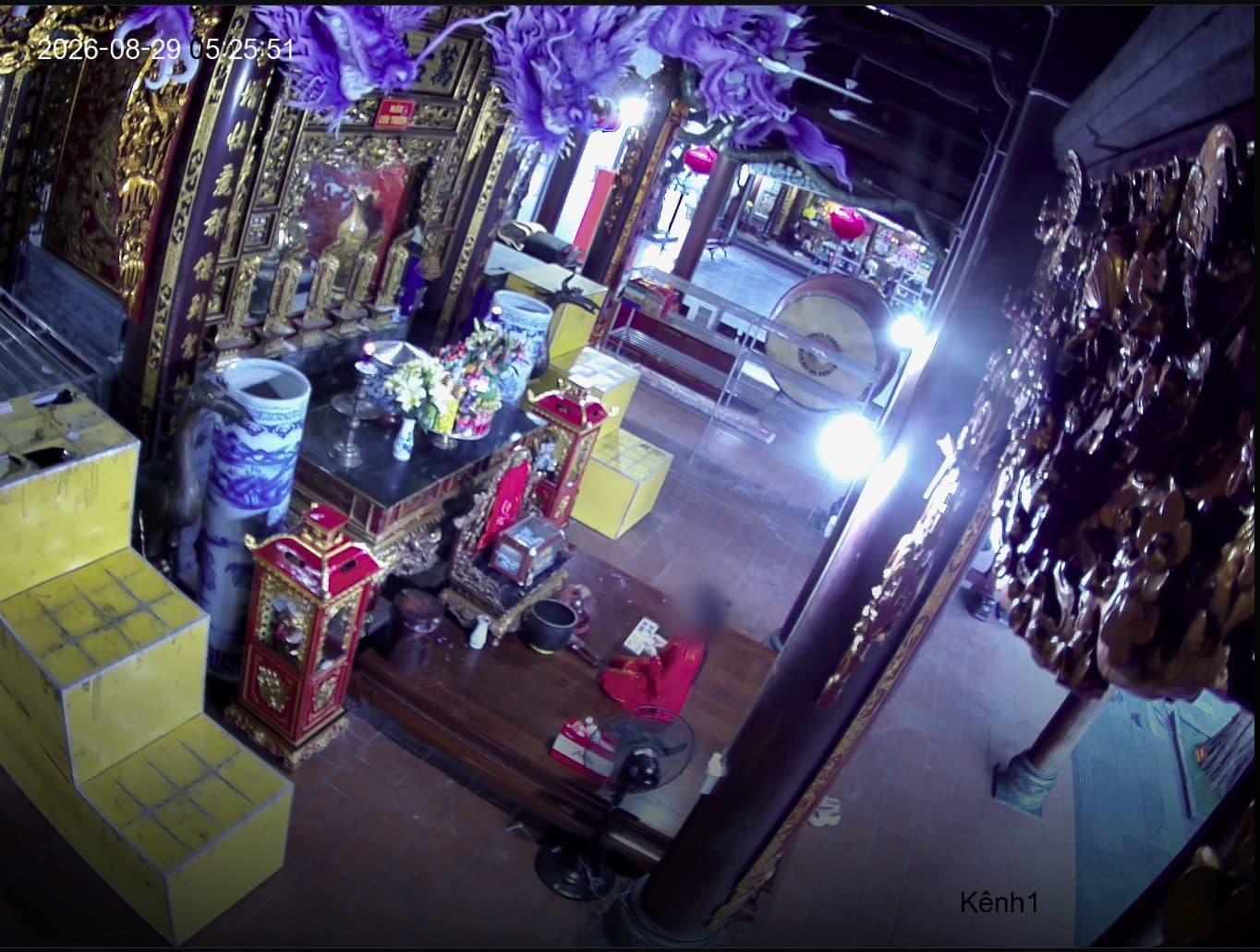
Real footage from the temple's camera system; faces have been blurred.
Looking ahead
Technology serving
the safety of sacred places
AI does not replace the temple's caretakers; it helps them see more and respond faster. On the same AI Box platform, the Bao Ha model can extend to nearby relics, towards a unified local heritage-protection network.
Every safe festival season is a complete one. AI helps the management keep the relic solemn even when tens of thousands of people arrive at once.
NTA's vision for the project
AI algorithms
One AI Box, layered algorithms
for each area of the temple
Object detection
Base layer: a one-stage CNN (YOLO family) detects people and flames in every frame, INT8-quantised to run in real time on the AI Box.
Multi-object tracking
Base layer: a Kalman filter and Hungarian matching (SORT/ByteTrack style) give each person a stable ID for counting and direction checks.
Fire detection
A flame region must persist across many frames and tend to grow before an alert fires. Used at: votive-paper burner, offerings store, wooden halls.
Fight detection
Pose keypoints and motion sequences are analysed to recognise scuffles. Used at: courtyard, gate and crowded areas during festivals.
Restricted-area intrusion
Virtual fence: checks whether a person's foot point lies inside the restricted polygon, on a time schedule. Used at: rear sanctuary and donation boxes after closing.
People counting and density
Counts people crossing the gate in both directions, estimates how many are in a zone and alerts above a safe threshold. Used at: gate, main courtyard, incense area.
Operations
Timely alerts, fewer false alarms
Reducing false alarms in a spiritual setting
Incense smoke and candlelight easily trigger false fire alarms on ordinary AI cameras, so each zone is configured separately.
Exclusion masks around incense burners, candle stands and oil lamps so they never trigger fire alerts.
Per-camera confidence thresholds and consecutive-frame counts, tuned for day and night lighting.
The dashboard groups alerts of the same type from the same camera within a time window into one incident, so staff are not flooded.
Event flow
IP camera → RTSP stream → on-site AI Box analyses each frame.
Event detected → JSON alert + annotated snapshot sent via webhook.
The central dashboard lists alerts by type, camera and time for staff to act on.
Want to use AI to protect your temple, pagoda or heritage site?
Contact NTA for a site survey and advice on an AI Box solution for temples, pagodas, relics and spiritual tourism sites.