Fixed cameras, NVIDIA Jetson AI Boxes and a VMS operations center
Combine fixed cameras, NVIDIA Jetson AI Boxes and a VMS operations center to detect events locally, coordinate alerts and bring in drones for verification when needed.
channels per box, depending on workload and configuration
4–164–16
channels per box, depending on workload and configuration
Challenge
Streaming all video to a central site uses a lot of bandwidth and is hard to process.
Large areas such as heritage sites, forests and industrial zones are hard to monitor continuously.
Alerts are scattered across many screens and hard to coordinate.
Solution
Edge video analysis with NVIDIA Jetson and DeepStream.
21 algorithms chosen per use case, with channel counts estimated from workload.
A VMS coordinates alerts, and drones add verification when needed.
Benefit
Less video needs to be sent to the central site.
Local analysis and alerts continue if the central connection is lost.
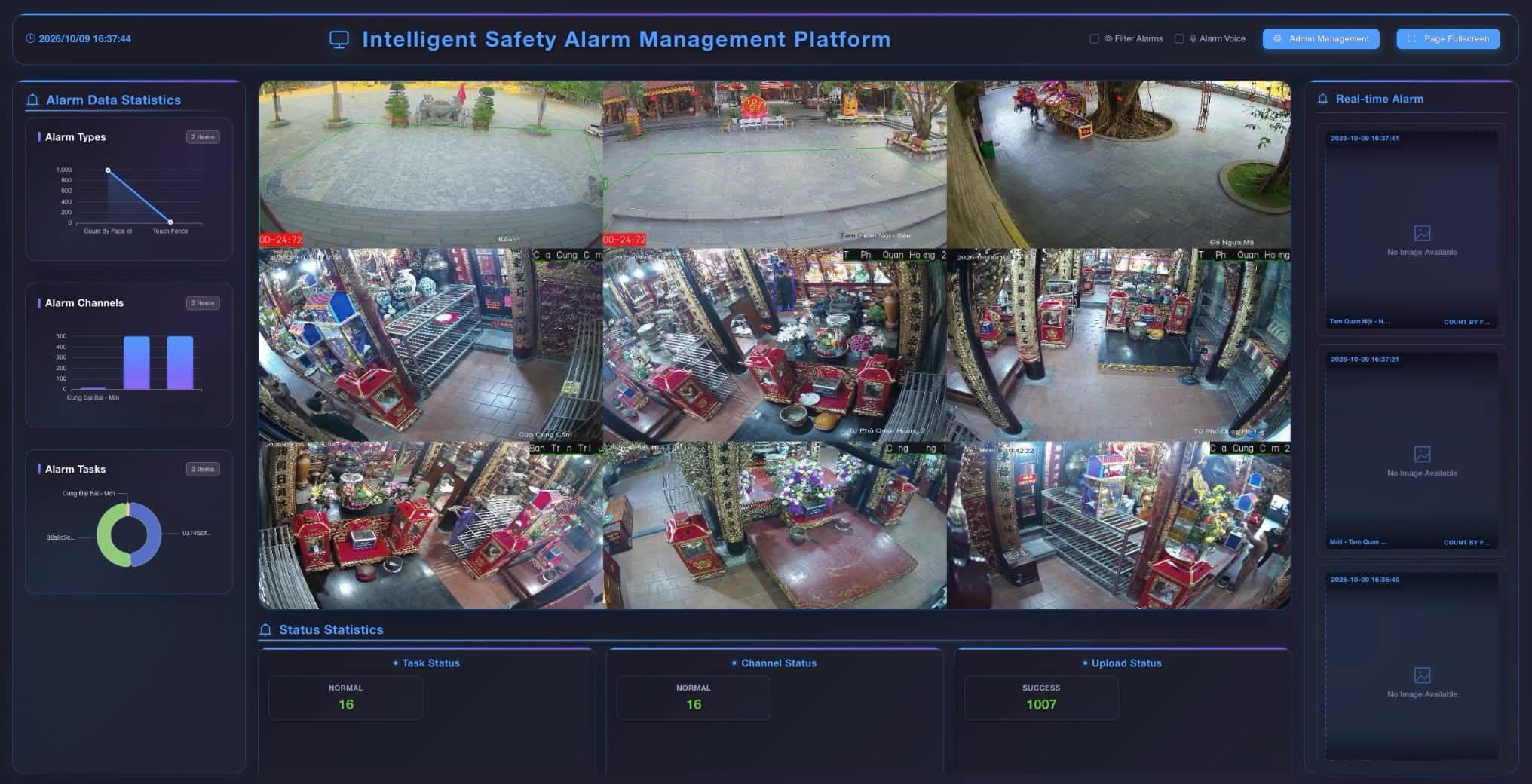
Cameras, maps and alerts in one operations interface.
In the field
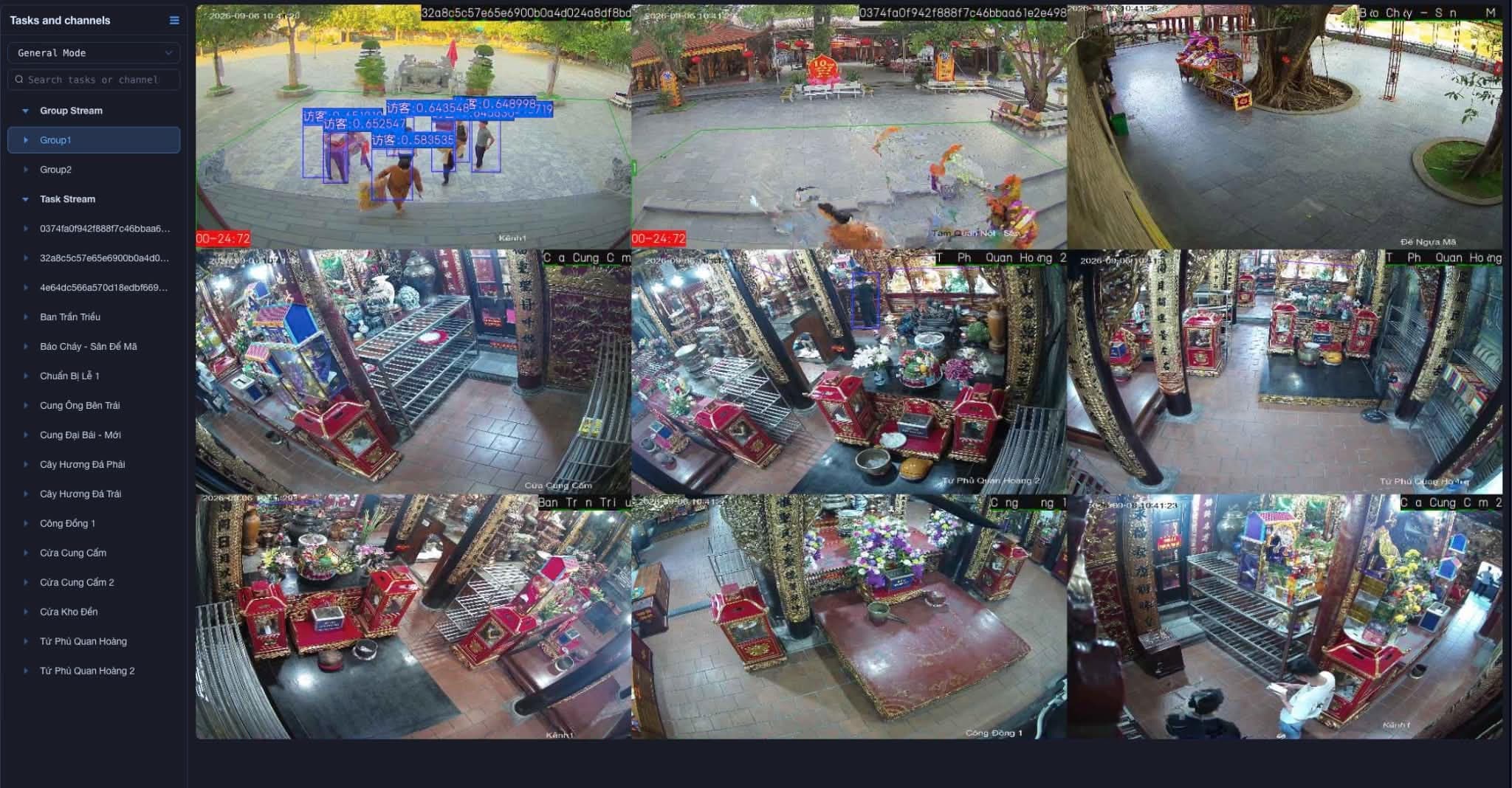
The system in operation
Photos of the system running on site.
Features
From cameras to operations
Three-layer architecture
Fixed, PTZ or 360-degree cameras capture video. AI Boxes process it at the edge. The central VMS shows cameras, maps and alerts.
Edge processing hardware
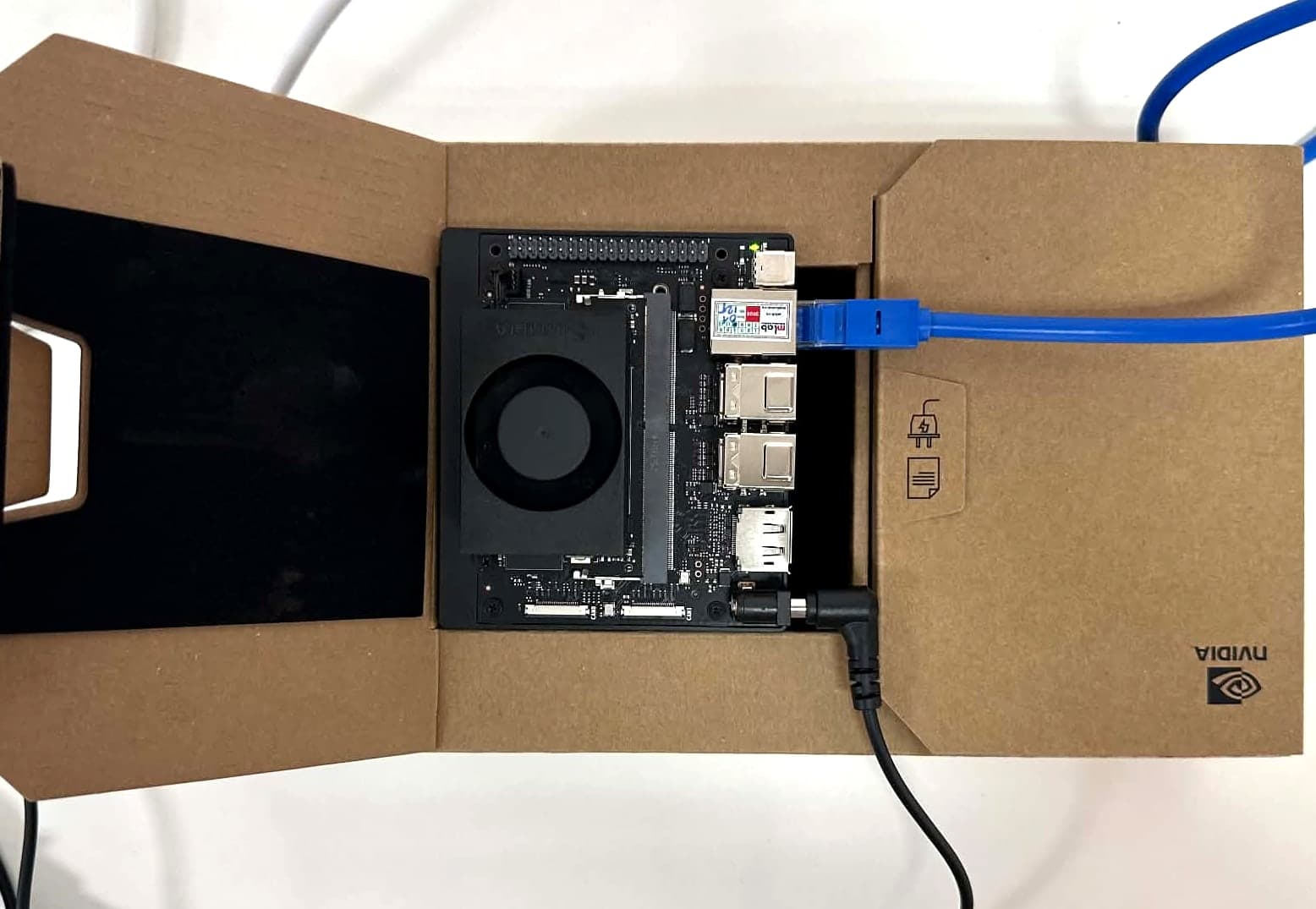
NVIDIA Jetson Orin NX 16GB Super is the primary configuration, with the pipeline built on DeepStream and TensorRT.
A catalog of 21 algorithms
Choose a mix per use case: asset protection, fire and smoke, public order, access control, intrusion and investigation.
Packages by sector
Heritage sites, forestry and rangers, industrial zones and warehouses. Each package prioritises a different set of algorithms.
Details
Use cases and solution details
Use cases
Protect heritage sites from intrusion, excavation and vandalism
Detect fire, smoke and animal intrusion across large areas
Monitor access, safety and incidents at industrial sites and warehouses
Three-layer architecture
Fixed, PTZ or 360-degree IP cameras capture relevant locations.
NVIDIA Jetson AI Boxes process video at the edge and publish events through MQTT/TLS or webhooks.
A central VMS presents cameras, maps and alerts; drone feeds can be integrated to verify incidents.
Hardware and edge processing
Select the configuration based on camera count, algorithm mix and site survey findings.
Jetson Orin NX 16GB Super is the primary box option; Orin Nano Super may suit smaller clusters.
DeepStream handles the RTSP, video decoding, TensorRT inference and object-tracking pipeline.
About 16 channels of 1080p decoding per box is a design estimate. Actual AI throughput depends on algorithm workload and requires on-site benchmarking.
Algorithms selected for each use case
The catalog contains 21 algorithms across asset protection, fire safety, public order, access control, intrusion and investigation. Not every algorithm runs simultaneously on every configuration.
Asset protection: excavation, camera tampering, left/removed objects, vandalism and scene changes.
Safety and public order: fire/smoke, audio events, fights, policy violations and unusual crowds.
Access control: people counting, vehicle tracking, Vietnamese plate recognition, virtual tripwires and face lists.
Intrusion and investigation: night intrusion, animals, unauthorized drones, PTZ tracking and weapons.
Three platform capabilities: analytics dashboard, on-site deterrence and smart video search.
Match channel count to workload
Channel counts are design estimates, not a promise that every channel runs all 21 algorithms. Benchmark mAP and latency with the intended workload before confirming a configuration.
Light workloads such as detecting and tracking people, vehicles or animals: up to an estimated 16 channels per box.
Medium workloads with fire/smoke, tampering, tripwire or plate recognition: around 8–12 channels per box.
Heavy workloads with pose, actions, face recognition or several combined algorithms: around 2–6 channels per box.
Packages by sector
Heritage sites: prioritize excavation, night intrusion, fire/smoke, animals and artifact-store protection.
Forestry and rangers: monitor fire, intrusion and patrol routes based on risk zones.
Industrial sites and warehouses: focus on intrusion, fire, access and operational safety.
Deployment at Bao Ha Temple
NTA has deployed the solution at Bao Ha Temple (Lao Cai): 3 AI Boxes analyse 48 existing IP cameras for fire detection, fight detection, restricted-area intrusion and people counting, sending alerts with annotated snapshots to a central dashboard. See the full case study at the end of this page.
FAQ
Frequently asked questions
Does BoxAI send all video to the operations center?+
Edge processing reduces the need to stream every video feed. Event, clip and storage handling are configured to project requirements.
How many cameras can each box support?+
It depends on resolution and algorithm workload. Sixteen channels is a decoding estimate; AI throughput must be benchmarked on site before final configuration.
Talk to us about your camera project
We survey the site to choose the box configuration and algorithm mix that fit your area.